Protect the final chance
Trade less freely and prioritize stage control.
Coach with intent
Turn an idea from chat into behavior Master Hand can express as focused strategies, readable decisions, and reusable input sequences.
01 · The mental model
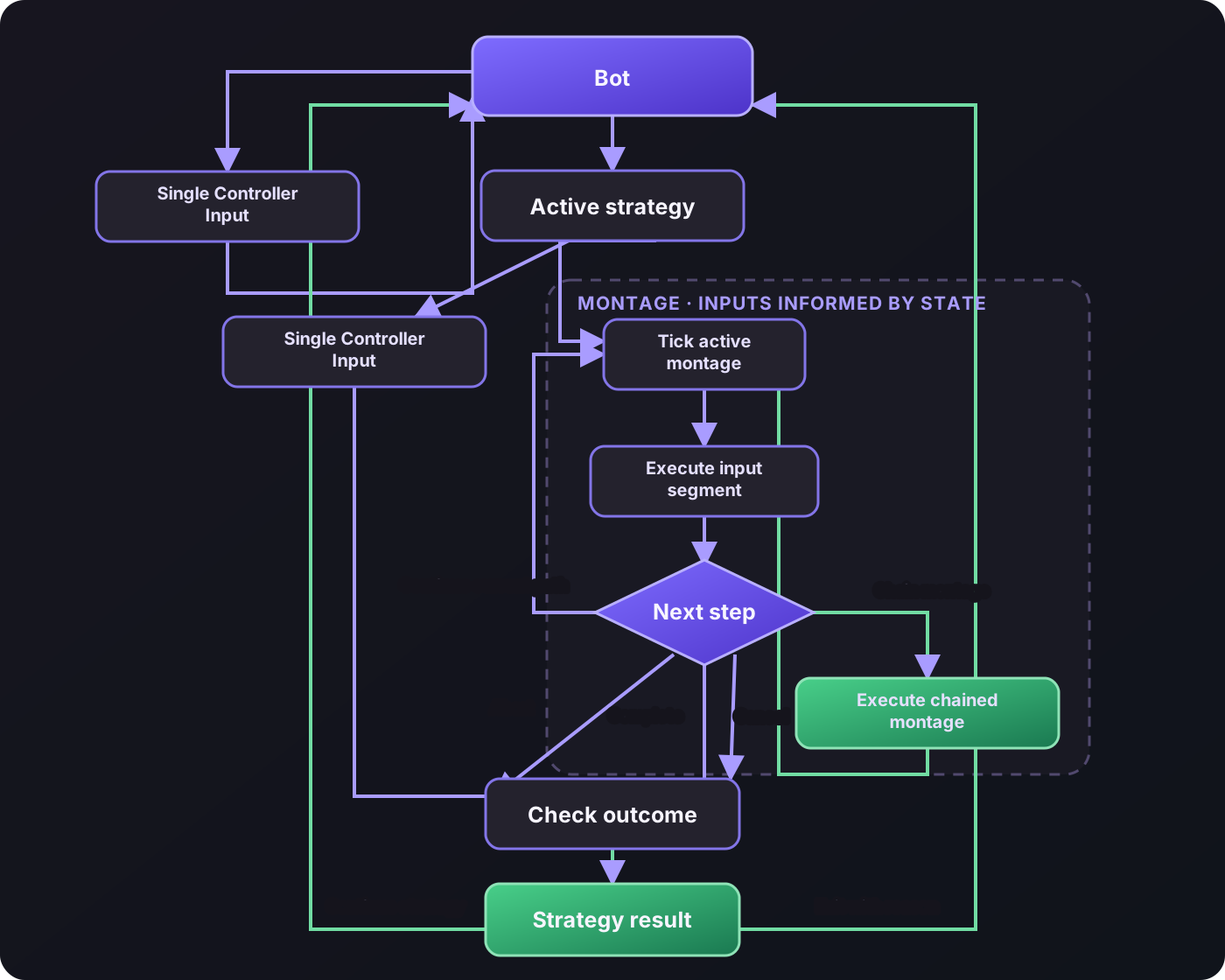
Every game frame, a bot can select or continue a Strategy, make a controller input directly, tick a Montage, or update its own state. Master Hand converts viewer coaching language into this per-frame structure.
A strategy is the bot's current objective. It may issue an input, execute a montage, update strategy state, continue, or exit for any reason. A montage is a state-informed sequence of inputs that may continue, branch or chain into another montage, abort with a reason, be canceled, or finish.
02 · Strategies
Strategies are focused collections of inputs and montages. They can last a few frames or most of a stock, and the bot can switch them when context changes. Focus keeps the code and the on-stream behavior understandable.
The Build Damage strategy can leave once its exit condition is met. The bot then chooses a Kill strategy built around traps and setups instead of continuing a damage combo past its purpose.
Trade less freely and prioritize stage control.
Favor spacing and safer openings.
Preserve resources and vary timing.
Mix drift, platforms, and defensive options.
03 · Montages
Branching montages represent combo chains. A segment can continue its current path, chain into another montage, complete, abort with a useful reason, or be canceled when the situation changes. Those outcomes inform the strategy, and the strategy informs the bot's next switch.
Direct repeated controller input is still possible, but it is the old style. When every behavior bypasses strategies and montages, conditions accumulate around raw button presses. The result tends toward spaghetti code and confusingly gated behavior that is difficult to coach or evolve.
04 · Prompt craft
Good prompts do not need every flowchart detail. State the situation, the named plan, the desired sequence, and the evidence for continuing or leaving. Guardrails let Master Hand make focused updates and structured code instead of rewriting unrelated behavior.
Vague
“Make Fox more aggressive and do cool combos.”
No context defines when aggression is useful, what the combo is trying to accomplish, or when to stop.
Structured
“Add a Corner Pressure strategy when Fox has center stage and the opponent is near an edge. Use safe shine or up-tilt starters, chain into an existing punish montage only after a confirmed hit, and exit with ‘Opponent escaped center pressure’ when they cross Fox or reach center.”
The goal, entry context, montage branch, and exit evidence are all explicit.
Vague
“Recover better and stop dying.”
“Better” does not distinguish low and high routes or explain when a route has failed.
Structured
“Split recovery into Recover Low and Recover High. Low recovery should preserve double jump until needed and abort its ledge route if the opponent occupies the ledge. High recovery should vary landing platforms and exit once grounded control is restored.”
Master Hand can update two focused plans without disturbing neutral game behavior.
Unique strategy names plus meaningful exit and montage-abort reasons also enrich announcer commentary. “Corner Pressure ended: opponent reclaimed center” tells viewers much more than another anonymous state change.
Live reference
Public definitions maintained by the Super Slop Bots team.
Loading coaching terms...